Momento Review: A Time-Loop Masterpiece That Breaks Your Brain (And Heart)
June 6, 2026 — Time-loop games are a dime a dozen these days. Between The Sexy Brutale’s murder-mystery charms, Outer Wilds’ cosmic wanderlust, and Deathloop’s assassin saga, the genre has been picked clean by developers aiming to replicate the magic of Majoras Mask or Groundhog Day. But every so often, a game comes along that doesn’t just borrow the formula—it redefines it. Enter Momento, a title that doesn’t just play with time. It dismantles it, reassembles it, and leaves you staring at the pieces, wondering how the hell it pulled off something so emotionally devastating.
From the team behind The Vanishing of Ethan Carter and Return of the Obra Dinn, Momento is less a game and more an experience—one that lingers like a half-remembered dream. It’s a story about loss, memory, and the brutal mathematics of grief, wrapped in a puzzle-box of a narrative that demands you piece together the truth from fragments of time. And after sinking 12 hours into its labyrinthine structure, I can say this: it’s the most human time-loop game ever made.
A Love Story Told Backwards (And Forwards, And Sideways)
At its core, Momento is a romantic tragedy. You play as a man—The Stranger—who wakes up in a city called New Fortuna, his mind fractured by a car crash that killed his wife. The catch? He doesn’t remember how she died. Worse, he doesn’t even remember her.
The game’s hook is its time mechanics, which don’t just loop—they splinter. Instead of a single timeline, you’re dealing with parallel versions of the same moments, each a different permutation of cause and effect. One loop, your wife is alive. The next, she’s in a coma. The next, she’s gone entirely. The game’s UI reflects this chaos: a fractured HUD where health, inventory, and objectives constantly shift, forcing you to adapt on the fly.
How the Time System Works
| Mechanic | Effect |
|----------------------------|------------------------------------------------------------------------------------------------|
| Time Spheres | Collect these glowing orbs to pause time and replay moments, altering key events. |
| Echoes | Ghostly projections of past actions that hint at alternate outcomes. |
| Consequences | Every choice branches into new timelines—some beneficial, others catastrophic. |
| Memory Fragments | Objects or dialogue that shift in meaning depending on which timeline you’re in. |
It’s overwhelming at first. After just 20 minutes, I was sweating, my brain straining to keep track of which version of events I was in. But then, something clicked. The game doesn’t just teach you its systems—it trains you. By the third hour, those fractured timelines start to feel less like a puzzle and more like a second language, one you’re finally beginning to speak fluently.
The Visuals: A Haunted Painting
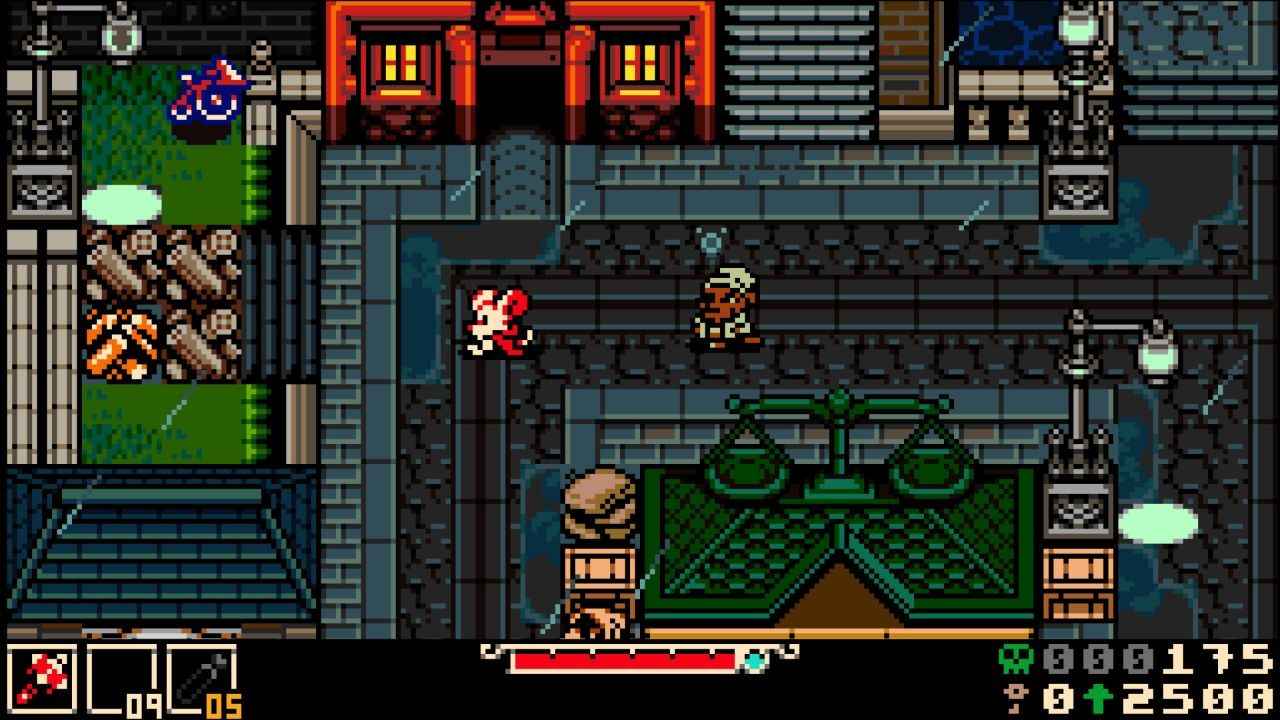
Momento’s aesthetic is a thing of eerie beauty. The game’s cel-shaded realism gives New Fortuna the look of a living painting—something between Control’s surreal government buildings and Death Stranding’s ghostly landscapes. Neon signs flicker. Rain slicks the streets. And everywhere, there’s the sense that the city itself is watching you, its architecture subtly warping depending on which timeline you inhabit.
The soundtrack is equally masterful. A mix of droning synths, distorted piano, and industrial noise, the score swells and ebbs with your emotional state. When you’re close to uncovering a truth, the music grows tense. When you’re lost, it drowns you in melancholy. It’s the kind of audio design that doesn’t just accompany the game—it becomes part of the experience.
Gameplay: A Dance of Precision and Chaos
At its heart, Momento is a narrative puzzle game, but it plays like a cross between Return of the Obra Dinn and Returnal. You’ll scour crime scenes for clues, interrogate suspects (or time-displaced versions of them), and piece together the events that led to your wife’s death.
What Works
- The Detective Work – Clues don’t just sit there; they shift. A bloodstain might be in one place in Timeline A, but vanish entirely in Timeline B. A character’s alibi could collapse depending on which loop you’re in.
- The Emotional Weight – This isn’t some detached murder mystery. Every revelation hurts. The game forces you to confront your own grief in real time, making the puzzles feel deeply personal.
- The Atmosphere – New Fortuna isn’t just a setting; it’s a character. The way the city changes between loops is like watching a wound heal and reopen in real time.
What Doesn’t
- The Pacing – Some loops drag. The game’s repetitive exploration (especially in early sections) can feel like a slog if you’re not invested in the mystery.
- The UI Confusion – The fractured HUD is brilliant in concept but occasionally too fragmented, leaving you unsure what’s relevant and what’s noise.
- The Stealth Sections – A handful of sequences require sneaking around, and the controls feel clunky compared to the game’s otherwise dexterous design.
The Verdict: A Game That Will Break You (In The Best Way Possible)
After finishing Momento, I sat in silence for a good ten minutes. Not because the game was bad—quite the opposite. It’s a masterclass in interactive storytelling, one that respects your intelligence while demanding your emotional engagement.
Is it perfect? No. The stealth sections stumble, and the early game’s exploration can feel tedious. But those flaws fade into insignificance when you consider what the game does achieve:
✅ A time-loop narrative that feels fresh and deeply human
✅ Stunning visuals and a haunting score that lingers
✅ Puzzles that evolve with you, rewarding dedication
✅ An emotional gut-punch that lingers long after the credits roll
Final Score: 9/10 – "A Time-Loop Game For People Who Hate Time-Loop Games"
If you’ve ever felt burnt out by the genre’s reliance on repetition, Momento will surprise you. It’s not just a game—it’s an experience, one that demands patience but rewards you with a story that feels alive.
Should you play it? Absolutely. Just make sure you’re ready to feel something.
More Like This:
- The Vanishing of Ethan Carter (for its narrative depth)
- Outer Wilds (for its time-bending exploration)
- Death’s Door (for its melancholic beauty)
Where to Buy:
TL;DR:
Momento is the time-loop game for people who think they’re sick of time-loop games. It’s emotional, brutal, and mesmerizing—a love story disguised as a puzzle-box, wrapped in a nightmare of fractured time. Play it. Then play it again.
What do you think? Would you endure a fractured timeline for a story this powerful? Sound off in the comments below.
ModVC Team
June 6, 2026